Jameel Observatory approach to satellite-based mapping of livestock feed reveals striking variations in Nigeria, informs first national feed inventory
ABUJA, NIGERIA – 26 FEBRUARY 2026
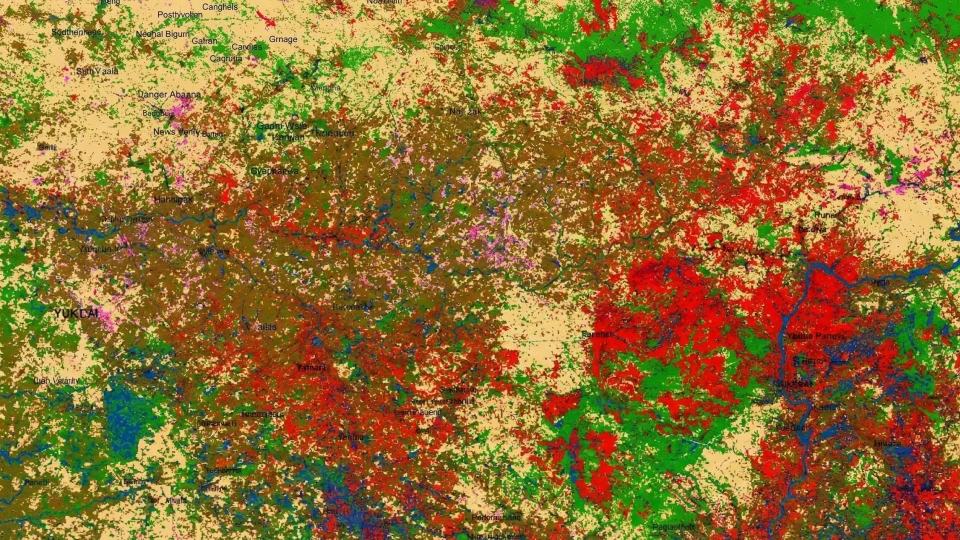
A satellite-based approach for mapping livestock feed supply and demand, developed at the Jameel Observatory for Food Security Early Action, has revealed striking findings in Nigeria – huge surpluses of fodder in some southern states and severe deficits in northern, livestock-dense states.
Led by Dr John Mutua, a Jameel Observatory fellow, the research provides valuable insights to help government agencies secure access to feed for livestock. The findings have also directly informed the development of the first comprehensive national feed inventory in Nigeria, a country where livestock supports over 20 million pastoralists, and the United Nations estimates 35 million people are food insecure.
The novel methodology from the Jameel Observatory integrates remote sensing with ground-truth data to highlight where feed and fodder are available or constrained, in order to inform decision-making by government officials to ensure livestock have access to the feed they need.
Presented to the Nigerian federal ministry for livestock development and the national bureau of statistics, the national feed inventory was developed as part of the Resilient African Feed Fodder Systems project, a three-year initiative to build resilience in African feed and fodder systems that is led by the African Union Inter-African Bureau for Animal Resources and the International Livestock Research Institute.
Closing the information gap
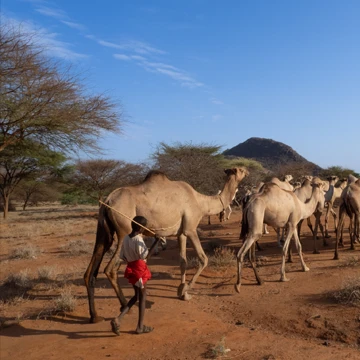
Across Africa’s drylands and rangelands, livestock – cattle, camels and small ruminants, such as sheep and goats – underpin the lives and livelihood of hundreds of millions of pastoralists providing food, income and a safety net in times of drought. Yet many governments lack national-scale data on feed composition, supply and demand, limiting planning and investment in a sector where feed can account for over 70% of production costs.
In Nigeria, livestock supports more than 19 million farming households, sustaining tens of millions of livelihoods and contributing significantly to the agricultural economy. With feed and fodder representing the majority of production costs, reliable national data is essential for strategic planning, sector transformation and economic resilience.
From research to national inventory
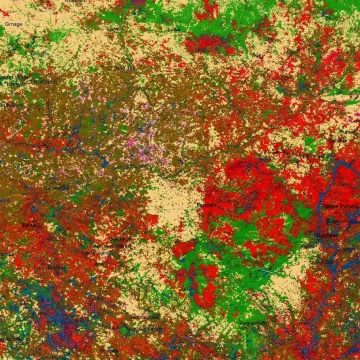
Using data on land use and fodder biomass availability from the European Union’s Copernicus satellite earth observation programme, alongside animal population data and livestock nutritional and feed parameters, the new approach from the Jameel Observatory models feed availability to produce comprehensive feed balance assessments.
Particularly valuable for pastoralist systems, where dry savannah zones host most ruminants but experience severe feed shortages, the satellite-based approach enables rapid assessment of when and where feed becomes critically scarce.
Compared with conventional, time-consuming approaches to generating feed balance assessments through household surveys and extensive local data collection over many years, the new methodology reduces assessment costs and time by 90% and provides near real-time, evidence-based support to policymakers.
Scaling impact across Africa
The methodology developed at the Jameel Observatory and national inventory for Nigeria lay the groundwork for stronger livestock feed strategies across Africa. By showing how satellite-based assessments can generate timely, cost-effective national data, the approach offers a practical model that can be adapted in other countries.